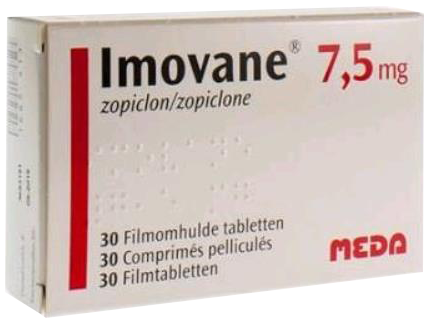
Zopiclone
£5.27 £0.83
Zopiclone represents one of the most widely used pharmacotherapeutic options in managing insomnia, especially in the short-term treatment of initiation and maintenance difficulties. Ever since entering the market with the status of being a first-generation cyclopyrrolone hypnotic, zopiclone has enjoyed a role as a non-benzodiazepine alternative based largely on claims of an improved safety profile with equal efficacy. However, this stance continues to attract considerable contestations about evolving studies on dependency, abuse, and danger.
Clinically, zopiclone can be seen to have a proven effect in lowering latency to sleep, total sleep time, and subjective sleep quality in adults. Zopiclone is thus a standard prescription in both primary and tertiary settings. However, with pharmacological similarities to benzodiazepines, zopiclone can be considered part of a class of drugs proven to have a risk association with tolerance, withdrawal symptoms, and cognitive impairment.
The issue of zopiclone is no longer limited to the clinic, but it has now become a large-scale public health problem. This shift of focus from short-term symptom relief to a wider discussion on prescription, use, and harm reduction accompanies the growing non -medical use of zopiclone, particularly in the UK. To understand zopiclone today, one should not limit one's thinking to the medical realm regarding sleep symptoms and outcomes only. One should consider a holistic view of zopiclone in terms of its molecular mechanism, medical application, side effects, and social impact.
Pharmacologic Profile of Zopiclone
Zopiclone is a cyclopyrrolone hypnotic, a class of nonbenzodiazepine hypnotics. Zopiclone and other nonbenzodiazepines were developed with a pharmacologically distinct chemical structure but efficacy and action similar to benzodiazepines. Although zopiclone acts very similarly to benzodiazepine hypnotics, it contains a different core chemical structure. Zopiclone acts very much like a benzodiazepine hypnotic.
Zopiclone is characterized by a rapid oral absorption rate that allows peak blood levels to be reached within one to two hours. Furthermore, this drug has been shown to possess a high degree of bioavailability, thus making it a good hypnotic if taken just before going to bed. The major pathway of metabolism for the drug takes place in the liver, whereas excretion of the urine component takes place unchanged.
On the pharmacological level, zopiclone has all five classic characteristic activities of benzodiazepines: hypnotic and anxiolytic, muscle relaxant and anticonvulsant, and amnestic effects. In essence, zopiclone's primary active ingredient is hypnotic.
Mechanism of Action
Zopiclone acts by binding to the gamma-aminobutyric acid type A receptor complex in order to produce sedative and hypnotic effects. Although zopiclone is a nonbenzodiazepine, it acts as a positive allosteric modulator of a very similar site to where benzodiazepines work, which is very close to the benzodiazepine receptor site. Such proximity enables zopiclone to produce amplification of inhibitory neurotransmission without using the same chemical scaffold.
Zopiclone acts by increasing the frequency of chloride channel opening in the GABA A receptor, leading to hyperpolarization of neurons. Hyperpolarization of neurons decreases cortical excitability and leads to easy induction and maintenance of sleep. Central nervous system depression, in turn, leads to a decrease in sleep latency time, increased sleep duration without frequent arousals, and an increase in sleep continuity.
Zopiclone possesses relative selectivity for the GABA_A receptor with an alpha-1 subunit. Such receptors are mainly linked with sedative and hypnotic responses. Such receptor specificity can be attributed to the reduced anxiolytic and muscle relaxant responses shown by zopiclone when given in low doses. Receptor specificity is not seen when higher doses of zopiclone are given. In such situations, amnesia and loss of coordination become more likely.
Such receptor level overlap with benzodiazepines explains both efficacy and tolerance, dependency, and withdrawal symptoms observed with zopiclone when used for an extended period.
Pharmacokinetics and Metabolism
Zopiclone is substantially absorbed when given orally, with a rapid onset of action, making it suitable for a bedtime hypnotic. Maximal plasma concentrations are achieved in one to two hours in most patients, which corresponds well with the onset time for sleep induction. Its pharmacokinetics are easy to predict in normal, although individual variations have been seen over different age groups and in those with liver dysfunction.
The major organ for metabolism is the liver, which is responsible for an estimated 95 percent of zopiclone clearance. The cytochrome P450 enzymes in the liver transform zopiclone into two major metabolites, zopiclone-N-oxide and N-desmethylzopiclone. Although these two have less pharmacologic activity relative to zopiclone, they do have a role in sedative effects. Excretion of these two takes place via renal clearance, although a small part of zopiclone gets excreted in the urine.
The half-life of elimination is usually between 3.5 and 6.5 hours in younger adults. In elderly patients, with lower clearance due to reduced liver function, this half-life is increased, hence predisposing them to sedation and falls on the following day. Therefore, a starting low-dose regimen is advocated in elderly patients.
Renal dysfunction can be considered to have a relatively small effect on the clearance of zopiclone, although caution is indicated in serious situations. Overall, these pharmacokinetic properties highlight the need for individualisation of dosing, especially in settings where accumulation is a serious concern.
Comparison with Other Hypnotic Agents
Zopiclone has been widely compared with both conventional benzodiazepines and other non-benzodiazepines in patients with insomnia. Clinical trials have found it to have the same effectiveness as traditional benzodiazepines in the treatment of sleep latency and sleep time in people suffering from insomnia.
These benzodiazepines included nitrazepam, flurazepam, and flunitrazepam. For a similar hypnotic dose, zopiclone is more advantageous because of its favourable toxicity profile. A drug with a shorter half-life is likely to reduce the chances of morning somnolence, or daytime sleeping, thus becoming an important criterion for pharmacologically active drugs that require involvement in daytime activities. Research conducted indicated a reduced rate of tolerance development and rebound insomnia with zopiclone over benzodiazepines, although this optimism has lately become less evident.
When contrasted with other Z drugs such as zolpidem and zaleplon, zopiclone can be seen to have approximately equal hypnotic efficacy in the short term. Zopiclone can be considered to have a higher incidence of unpleasant taste side effects and a higher potential for dependency in some studies. Its receptor binding affinity can help in explaining small variations in side effects among these drugs.
However, zopiclone represents a middle ground in this respect, where it is both effective and reliable in short-term insomnia, but not without the risk of dependency and hence withdrawal symptoms.
Clinical Application in Insomnia
Zopiclone is mainly indicated for short-term treatment of insomnia in patients with difficulty initiating sleep, maintaining sleep, or both. Uses of zopiclone are based on a balance of efficacy and safety. Generally, all guidelines recommend zopiclone for patients with insomnia when non-pharmacologic modalities have not worked. Such non-pharmacologic methods include behavioural interventions such as sleep hygiene and cognitive therapies for insomnia treatment.
As a matter of fact, zopiclone is most indicated in cases of acute or occasionally interrupted insomnia, such as when an individual finds himself under stressful or ill situations where sleep is interrupted. Moreover, considering the fast onset of action and predictable pharmacology, this medication can be indicated in short-term treatment where immediate relief of symptoms is a priority. Long-term therapy is not advisable because of increased chances of tolerance and dependency.
The usage of zopiclone in a clinical setting is largely based on individual patient factors such as age, co-existing medical and surgical conditions, other drugs being co-administered, and patient use of drugs of Abuse.
Efficacy in Short-Term Treatment
Randomized controlled trials have shown zopiclone to be effective in improving objective and subjective measures of sleep in short-term treatment. Zopiclone decreases latency to sleep, nighttime awakenings, and time awake in patients compared with a placebo.
The total sleep time length gains a small but important increment, and patients notice improvements in sleep quality and function during the following day. The observed effects appear in the first few nights of treatment and are sustained over a course of two to seven weeks.
A nonbenzodiazepine hypnotic such as zopiclone is a good alternative in short-term studies because it acts equally well in these studies, with fewer side effects of drowsiness in the morning. Zopiclone has a short half-life, which ensures less residual sedation, important in circumstances where a subject must be mentally alert during the daytime.
However, the gains in terms of patient outcome will soon plateau. After a couple of weeks, the additional benefit will decrease, but the risk profile will become less attractive. Such an observation will support a consensus view that zopiclone treatment must be limited to a fixed course.
Effectiveness in Older Adults
Insomnia affects elderly patients with regard to falling asleep, staying asleep, or both. Zopiclone has become a very common treatment among the elderly, as their sleep patterns make it relatively complicated for them to just rely on non-pharmacological treatments. Of course, there are instances where zopiclone can really work wonders for seniors with a short life span.
Trials conducted on seniors above the age of 65 years have demonstrated the consistent and significant effect on the parameters of sleep, such as sleep latency and sleep time. However, age-related pharmacokinetic variations and diminished central nervous system sensitivity have allowed clinicians to achieve the same results with lower doses.
Studies done with elderly participants have shown the following results:
- Shorter sleep onset latency without causing too much sedation during the day
- Better sleep quality and fewer awakenings at night
- Less disorientation compared to the use of long-acting benzodiazepines
- Good tolerability for daily doses up to 3.75 mg
Even though these advantages are present, there are still risks associated with them. Increased vulnerability to developing balance dysfunction, reduced reactions, and cognitive changes is a problem in elderly patients. Even minimal amounts of lingering somnolence can predispose patients to falling and fractures, mainly during nighttime arousals.
Therefore, zopiclone therapy in elderly patients needs to be confined to a short course and initiated with a minimal effective dosage. Refilling a prescription without reviewing it increases the risk of an adverse event in elderly patients.
Dosage and Administration Guidelines
The dosing of Zopiclone is intelligent so that the effective hypnotic action is delivered while the residual sedation and the dependence risk are limited. The two principles of clinical practice are low start and brief treatment. Dosage decisions should always take into consideration the age, liver function, and the overall susceptibility to central nervous system depressants.
The usual administration dosages are as follows:
- Adults 18-64 Years: 7.5 mg once daily
- Adults 65 years and older: 3.75 mg at bedtime
- Hepatic impairment: initiation dose of 3.75 mg, monitoring required
- Renal impairment: No change in dose required in renal impairment; cautious in severe cases
The timing of administration does influence the effectiveness. If zopiclone is taken right before bed, it will ease the patient's falling asleep; however, the food intake can slow down the absorption and lessen the hypnotic effect. It is best for the patients not to drink any alcohol since the combined use substantially increases the risk of respiratory depression and complex sleep behaviours.
Patient Selection Criteria
Zopiclone can be used only if a definite assessment shows that insomnia is a problem, a serious problem, and a problem affecting everyday functioning. Ordinarily, non-pharmacologic methods such as the practice of sleep hygiene and cognitive behavioural therapy in insomnia ought to be used before considering pharmacologic therapy with zopiclone. The most suitable candidates for zopiclone include patients in whom these methods have failed or in whom pharmacologic help with sleep is short-term.
The ideal patients would include adults with a confirmed diagnosis of primary insomnia, difficulty in falling asleep and/or maintaining sleep, and a reduced level of sleep efficiency. The pharmaceutical can also be used in temporary insomnia associated with identifiable stressors, illness, and lifestyle change, where a definite plan for discontinuation is present. Stability in patients, especially in their emotional and substance abuse status, is a critical factor in patient selection.
Some patients must be approached with extra caution or avoided altogether. Zopiclone is not recommended for patients with respiratory illness, undiagnosed sleep apnea, or patients with myasthenia gravis because it can cause respiratory failure. Patients with liver dysfunction need a lower dose and careful observation, and patients with a history of substance abuse and mentally unstable patients have a higher risk of dependency.
Zopiclone must not be administered during pregnancy and lactation because of the potential risk of harm to infants and foetuses, despite which therapeutic effectiveness is not a major consideration. Patient selection and periodic review of treatment are important in minimizing harm with a view to retaining benefit.
Risks, Adverse Effects, and Dependence
The most typical side effect associated with zopiclone is experienced by a large number of users, and the same can last for hours after taking the drug.
The adverse effects that most often occur include:
- Persistent bitter or metallic taste
- Daytime drowsiness and fatigue
- Dizziness and impaired concentration
- Headache and gastrointestinal discomfort
More serious adverse drug reactions, while being rare, still require close monitoring:
- Loss of motor coordination resulting in falls and bone fractures
- Central respiratory depression, particularly when occurring together with alcohol or opioids
- Sleep-related activities that are not conscious, such as sleepwalking, sleep-driving, or eating while asleep
- Allergic reactions with symptoms such as rashes, swelling, or breathing difficulty
Potential for Dependence and Misuse
The first impression that zopiclone was not addictive has not been validated in the long run. Current data indicate that physical and psychological dependencies are both possible, with the occurrence sometimes within a few weeks of steady use.
There are also the following factors that elevate the risks of getting addicted to the drug:
- Usage that goes beyond the recommended two to four weeks
- Going on to higher doses due to developing tolerance
- History of drug misuse or mental problems
- Feeling anxious about going to sleep without the medication
The specific action of zopiclone at the GABA_A receptors that are sensitive to benzodiazepine explains the development of cross-tolerance with benzodiazepines, which in turn makes the switching between sleeping pills more complicated.
Withdrawal Symptoms and Management
If a person suddenly stops the intake of zopiclone after using it for a period of time, withdrawal symptoms may begin to appear, and these symptoms may manifest after one to two days. The withdrawal symptoms can cause a certain level of discomfort depending on the dosage level and usage period of the drug.
Rebound insomnia, which can be worse even than the original insomnia, and also includes anxiety, irritability, and agitation, is one of the common withdrawal symptoms.
In some cases, seizures and significant psychological distress have been reported, but these can occur, especially when the drug is used at a high dose and for a longer period of time. In order to reduce the chances, the patient should start taking the drug on a tapering dose regimen, where the dose is reduced by 25% at an interval of one week, which is quite common. In some cases, the reduction is longer depending on the response of the patient to the medication.
Frequently Asked Questions
1. What is the current dosage regimen recommended for zopiclone in treating insomnia?
It is not recommended that zopiclone be used beyond the treatment of insomnia, which is generally two to four weeks, and may include tapering. The usual dose in adults is 7.5 mg at bedtime, but older patients or people with liver problems should begin with doses of either 3.75 mg.
2. How does the effectiveness of zopiclone compare with that of other sleeping drugs?
Zopiclone is comparable to a benzodiazepine in terms of its efficacy in increasing sleep latency and improving sleep quality. But in terms of long-term efficacy, its superiority in terms of safety may be compromised because of its dependency and withdrawal problems.
3. What are the most common side effects of zopiclone?
The main side effect is a combination of bitterness or metallic taste. In addition, drowsiness, dizziness, headache, dry mouth, and reduced concentration, mainly in the morning hours, are among other side effects.
4. What risks are associated with long-term zopiclone use?
The risk of long-term use includes tolerance, dependence, and withdrawal symptoms. Cognitive impairment, falls, and complex sleep behaviours are more likely with extended or high-dose use.
5. How does zopiclone work in the brain?
Zopiclone increases the inhibition mediated by GABA by modulating the GABA_A receptors. This lowers neuronal activity and induces sleep. Its chemical structure is different from that of benzodiazepines; however, its functional effects are very similar.
6. What is the process of zopiclone metabolism and elimination?
Zopiclone is primarily processed in the liver, and its inactive metabolites are eliminated via the kidneys. The half-life is extended in the elderly and in patients with liver disease, thus necessitating dose modifications.
7. What are the possible withdrawal symptoms when zopiclone is discontinued?
One might experience rebound insomnia, anxiety, tremors, sweating, nausea, and restlessness as part of withdrawal. The risk of severe symptoms is increased if the drug has been used for a long time or if it is stopped suddenly.
8. Is there any link between zopiclone and misuse or nonmedical use?
Indeed. There have been reports of rising nonmedical use, especially in the UK. Often, misuse involves mixing zopiclone with alcohol or opioids, which dramatically raises the risk of harm.