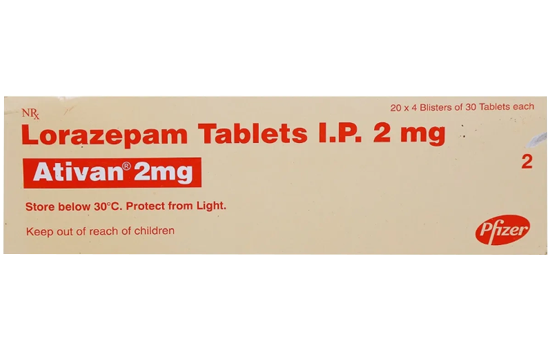
Lorazepam
£5.27 £0.83
Lorazepam has been a staple in mainstream medical practice for decades. A reason exists behind why it has so firmly held its place. It is one of those medications that clinicians reach for when they need something dependable, fast, and predictable. Whether it's a patient who's trembling through a surge of panic, someone in the middle of a seizure, or just someone who can't calm down enough for a medical procedure, lorazepam very often steps in as the stabilizing force.
What's interesting is that people generally know the name, but not the story behind it. Most people think all benzodiazepines work in just about the same fashion, but lorazepam has a profile that is quite different from others. Its design, its metabolism, and how it moves around inside the body allow it to take effect quickly without leaving lingering byproducts in its wake. That counts for more than most people appreciate, especially in emergency situations where doctors need a drug to do its duty cleanly and then get out of the way.
What Makes Lorazepam Different?
When you line lorazepam up next to the rest of the benzodiazepine family, a few traits jump out immediately. Most meds in this class break down into active metabolites that hang around in the body, sometimes longer than expected. Lorazepam doesn't. Once it's processed, it's done. No leftover compounds altering the picture, no surprises hours later. That clean metabolic path gives clinicians a level of control they don't always get with similar drugs.
A major factor contributing to its frequent presence in emergency rooms and intensive care units is its predictability. Nobody can afford to take a risk in predicting a drug's reaction in a specific liver or under unusual physiological stress during seizure or severe agitation situations. The metabolism of lorazepam is independent of the cytochrome P450 system of the liver, hence providing reliability in the case of patients with compromised liver function.
In a nutshell, lorazepam is not merely a benzodiazepine. It has a clear metabolism, consistent action, and rapid, predictable effect, which give it a particular niche in modern-day practice.
Pharmacological Profile of Lorazepam
The clinical usefulness of lorazepam is based on both its structural peculiarities and its predictable behaviour in the body. At first glance, one can classify it without difficulty as a benzodiazepine, but the internal processes are different in ways that account for its safety and efficacy.
Chemical Structure and Key Properties
Chemically, Lorazepam belongs to the 1,4-benzodiazepines class, but the main factor shaping its profile is the 3-hydroxy configuration that is attached. This slight change in the molecule alters the pharmacokinetics of the drug and makes its metabolism much more straightforward than that of diazepam, for example, where the drug is broken down into a long series of active metabolites. Lorazepam, on the other hand, goes through direct conjugation. The drug forms a bond with glucuronic acid in the body to produce an inactive substance and then pushes it down the eliminative pathway.
This straightforwardness results in less unpredictability in patients with poor or erratic liver function. It also supports the idea that lorazepam gets across the blood-brain barrier successfully. The drug is taken up rapidly and gets to the CNS in a form that the body can eliminate without leaving a long trail of metabolite activity behind.
Pharmacodynamics
Lorazepam works similarly to other benzodiazepines in enhancing the effect of GABA, the main inhibitory neurotransmitter of the brain. It binds to specific sites on GABA-A receptors, thereby increasing chloride ion movement into neurons. That influx stabilizes the cell membrane and makes neurons less likely to fire.
One single mechanism gives several therapeutic effects such as anxiolysis, sedation, relaxation of the muscles, prevention of seizures, and development of short-term anterograde amnesia. The anti-anxiety effect mainly takes place in the amygdala, while the cortex and deeper brain structures are responsible for its anticonvulsant and sedative actions. This mostly yields a smooth feeling throughout the course of the drug action and is hence well-trusted both in psychiatric and emergency settings.
Pharmacokinetics
Lorazepam is very well absorbed, with an oral bioavailability of around 90 percent. Following a usual dosage, peak blood levels occur in about two hours; it is then widely distributed throughout the body. Approximately 90 percent is bound to plasma proteins, which tends to normalize its concentration within the bloodstream.
Most of the metabolism takes place via glucuronidation and not through the cytochrome P450 system. The independence from liver enzymes constitutes one of the biggest advantages of this drug, especially for elderly individuals or those who suffer from liver diseases. The inactive metabolite is then excreted mainly by the kidneys; thus, impaired renal function seldom leads to significant alterations in its clearance.
On average, it has a half-life of about 14 hours, long enough to control symptoms but short enough to avoid heavy accumulation upon proper dosing.
Mechanism of action
The action of lorazepam is traceable to a single, beautiful mechanism-it heightens the quieting signals native to the brain's wiring. Instead of forcing sedation, it amplifies the body's own inhibitory system, which is why the drug feels both powerful and controlled.
GABAergic modulation
GABA is basically the natural brake pedal of the brain. Upon binding to its receptor, it opens chloride channels that help quiet overly active neurons. Lorazepam doesn't replace GABA or generate more; instead, each GABA molecule becomes far more effective at its job.
Lorazepam attaches to certain areas of the GABA-A receptor complex, thus promoting the influx of chloride ions into the neuron. This extra inflow pushes the cell towards hyperpolarization-that is, the neuron becomes less likely to discharge. The result is a movement towards relaxing and stabilizing the neural networks that were firing too vigorously.
It is this mechanism through which lorazepam can rapidly relieve a person having a panic attack, calm someone going through severe agitation, or bring to a halt the euphoric state of a seizure. It doesn't override the system-it enhances the pathway that's already there.
Central Nervous System Pathways
Different parts of the brain respond differently to lorazepam, and it is in the amygdala, which is responsible for processing fear and emotional intensity, that this anxiolytic effect comes alive. The first wave of relief often shows itself here in patients who feel a constant sense of threat.
The cerebral cortex, which inhibits abnormal electrical activities, helps in the regulation of seizures at a higher level. In addition, the limbic system and the reticular formation, which deal with sleep and consciousness, have roles to play in the sedative and amnesic actions of the drug.
Because of the rapid diffusion of lorazepam into the blood-brain barrier, the changes arise within minutes following an intravenous dose and shortly thereafter following an oral dose.
Therapeutic Applications
Lorazepam finds its place in clinical practice because it adapts well to these different scenarios. It works fast, is predictable in behaviour, and covers a wide range of conditions in which the nervous system needs to be brought under control. From anxiety to seizures that may be life-threatening, the same underlying mechanism can be shaped to suit very different needs.
Anxiety Disorders Management
Lorazepam is a benzodiazepine that is often prescribed for a brief period of time to alleviate anxiety, especially if the symptoms are really bad and have just appeared. The patients suffering from general anxiety, acute panic episodes, or sleep disturbances due to anxiety find it highly effective because of its fast-acting and reliable properties. The normal initial dose is about 2 to 3 milligrams per day, which is normally divided into two or three doses, but still, many doctors are keeping their patients far below the maximum of 10 milligrams.
The elderly need much smaller doses. As a person gets older, his/her metabolism and pharmacological sensitivity are altered; therefore, 0.5 to 1 milligram is normally sufficient for insomnia or severe anxiety. The problem of tolerance gradually increases, and the doctor has to change the treatment plan every few weeks or months at most.
Sedation and Preoperative Use
The amnestic effect of lorazepam is sometimes appreciated just as much as the calming effect. Patients relax before surgeries or procedures and remember nothing of the painful parts. The amnestic effect of lorazepam goes well with the calming effect of the drug.
When given intramuscularly, the usual dose is about 0.05 mg/kg two hours before the procedure. In the case of intravenous administration, the applied dosage is 0.044 mg/kg and is usually limited to 4 mg in young adults and 2 mg in seniors. It is a slight cardiovascular depression that makes it safe for patients with heart problems to undergo conscious sedation.
Treatment of Status Epilepticus
Status epilepticus is one of those emergencies where every second counts. Lorazepam is outstanding because of its rapid onset of action and long enough duration to prevent the seizure from rebounding. Guidelines have continually placed it among the first choices for intravenous treatment.
The routine guideline dosing is 0.1 mg/kg, not to exceed 4 mg, administered slowly, no more rapidly than 2 mg per minute. If the seizure does not cease, the dose may be repeated in 5 to 10 minutes. The drug's rapid penetration into the brain, coupled with its longer duration of anticonvulsant action compared with diazepam, accounts for its use as the agent of choice for many specialists. The paediatric approach follows the adult strategy, with adjustment for weight and clinical condition.
Role in Agitation Control
Acute agitation in emergency departments and the ICU can lead to situations that are extremely difficult to control. Nevertheless, lorazepam is a good option because it allows the patient to be calm but not completely sedated. The initial IV doses vary from 0.02 to 0.04 mg/kg, along with maintenance dosing given as required.
It is one of the medications used in the treatment of delirium tremens, where the patient goes through agitation, confusion, and life-threatening autonomic instability. Sometimes, doses as high as 4 mg may be needed every few minutes IV to regain control of the condition.
Safety and Adverse Effects
As effective and commonly used as lorazepam is, it still holds some risks that must be given attention. Most of the problems arise when it's taken for too long, taken in higher-than-needed doses, or mixed with other depressants. Understanding its safety profile helps keep treatment both effective and responsible.
Common Side Effects
Most side effects are related to the drug's action upon the central nervous system. Sedation is what most people note, though some people feel agreeably calm, while others can become sluggish or somnolent during the day. Dizziness, slowing of reaction time, and a sense of mental fog may then follow, which is actually why driving or operating machinery becomes tricky.
There are also psychiatric and neurological effects that show up in the minority of users. Confusion, irritability, or brief episodes of disorientation sometimes appear, especially in older adults. Other reports include balance issues, cognitive slowdowns, or unusual emotional reactions. The small body of research touches on possible metabolic or cardiac effects, though the evidence is far from settled.
Interestingly, women appear to report more side effects than men. Whether this is due to biological differences, prescribing patterns, or reporting behaviour is not entirely clear, but the difference arises consistently in observational data.
Dependence and Withdrawal Risks
Lorazepam can be addictive even when taken as prescribed. The development of dependence does not necessarily equate to abuse; it is simply a natural response of the human body to continued exposure. Soon enough, the nervous system becomes dependent on the drug's repressive action. When this artificial support is abruptly removed, it cannot easily regain its balance.
The discomfort of withdrawal can range from uncomfortable to dangerous. Anxiety, restlessness, tremors, excessive sweating, or nausea can be felt in waves. At the extreme end, seizures and delirium are possible. That is why abrupt cessation is never recommended. The safest path is a slow taper under medical supervision and giving the brain time to reset.
The risk increases with the duration of use, dose, or sudden changes in dose. Individuals who have been taking lorazepam for several months sometimes do not appreciate how challenging the taper can be until symptoms begin to emerge.
Tolerance Development
Another challenge is tolerance. The same dose often doesn't feel as effective after weeks of use. The sedative or calming effect tends to slip, and this might make the patients consider increasing the dosage. The problem is that increasing the dosage accelerates dependence without guarantees of better results.
Cross-tolerance further complicates things. When lorazepam starts to become less effective, in general, so do the other benzodiazepines, limiting any options for switching. Doctors normally keep a close watch for the first signs of tolerance so they can switch the treatment before the cycle becomes too tight.
Clinical Research - Perspectives in Evolution
Lorazepam has been prominent in the pharmaceutical arena long enough for researchers to take the broad strokes to understand, but the fine details are still being charted. Continuous studies keep on uncovering the way the drug interacts with different population groups, how it stands against similar medications, and where exactly it could be used in terms of more specific therapeutic strategies.
Current Research Trends
Pharmacovigilance is one of the major issues, and it refers to the large-scale, real-world monitoring of side effects and long-term outcomes. Researchers are conducting these studies to uncover patterns that were not easily detectable during clinical trials, for instance, the identification of certain patient populations that have a higher likelihood of experiencing difficulties with cognition, dependence, or falling. The elderly are one of the largest groups participating in this research, as they are often prescribed benzodiazepines, and their drug metabolism is different. Researchers are trying to identify the adverse events, such as hospitalization or mobility problems, that correspond to the different doses being given, from very low (0.5 mg) to moderate (4 mg) range.
Comparative trials are also underway. Lorazepam is being investigated against agents such as diazepam, zolpidem, and even atypical antipsychotics in order to determine which situations favour one drug over another. While lorazepam fares well in virtually every trial, there is still a need for more explicit, evidence-based guidelines.
Innovative Therapeutic Approaches
On the cutting edge, neuroimaging is opening new windows into how lorazepam affects the brain. The PET scan shows the areas that are most affected by the treatment, which in turn explains the phenomenon of some symptoms disappearing fast and others taking longer to get rid of. Interest in studies at the level of receptors is increasing as well. There are people who suspect that if GABAB pathways are indeed involved in some ways in catatonia, then this knowledge could possibly lead to future drug development or combination therapies right from that interaction.
The researchers are furthermore looking into combining approaches: using lorazepam with other drugs or modalities to make the duration of improvements longer, instead of just having the temporary ones.
Frequently Asked Questions
1. What pharmacological finding has been observed in lorazepam?
The drug makes the neurons less excitable by increasing the potency of GABA at the GABA-A receptor. Unlike other drugs, Lorazepam undergoes direct glucuronidation and not CYP, which is why the drug lacks active metabolites and works well in the presence of liver disease.
2. How long does it take for lorazepam to start working?
The duration to act depends on how it is administered. For the intravenous form, it acts within one to three minutes, and the oral form acts within 20 to 30 minutes. The sedative's full effect takes one hour to an hour and a half.
3. How does Lorazepam interact with other drugs?
Most problems occur when administered with other CNS depressants. Alcohol, opioid medications, antihistamines, or muscle relaxers can worsen sedation and breathing slowdown.
4. What is the long-term impact of lorazepam on the mental condition?
Long-term usage might result in addiction, tolerance, and psychiatric disorders like amnesia or inability to concentrate. Rebound anxiety, which is experienced by many users, is also one of the withdrawal symptoms.
5. What are the clinical scenarios where lorazepam is the drug of choice?
Status epilepticus, withdrawal from alcohol, and severe agitation in the ICU or emergency department are the areas where it is claimed to be the first-line agent. Moreover, its stable metabolism rate suggests this drug could be a good choice for patients with severely damaged hepatocytes.
6. Comparison with Other Anxiolytics?
Its onset of action is far quicker compared with SSRIs, which can take weeks to work. In regard to intense, abrupt scares, it always outperforms something such as buspirone or hydroxyzine. In regard to other benzodiazepines, the lack of active metabolites is beneficial for patients who require unblemished sedation.
7. What are the risks of using lorazepam with alcohol or recreational drugs?
Alcohol and sedative drugs combine the action of lorazepam, and that is why people may experience blackouts, serious breathing difficulties, or lack coordination. The influence of just a slight portion may be that it changes the impact of the substance.
8. How should lorazepam be stopped?
The best practice is to taper off the drug slowly. Generally, almost all medical professionals begin by tapering off the dose slowly, monitoring for any signs of withdrawal, such as irritability, trembling, and insomnia.